How Does a Newborn Baby Who Has Been on Morphine for Sugery Act During Withdrawal From It

Ages & Stages

Bathing Your Baby
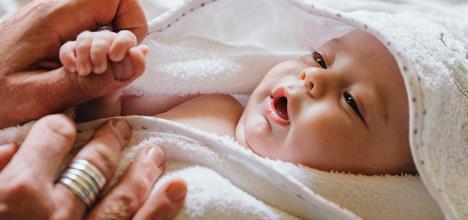
Bathing Your Baby Bathing Your Baby

Folio Content

By: Dipesh Navsaria, MPH, MSLIS, Dr., FAAP

Bathing your baby is an experience many parents treasure. It's a swell fourth dimension to bond, distraction-free, equally your tiny new family unit fellow member enjoys the sensation of warm water on their skin. Yet this common parenting ritual ofttimes comes with questions, and sometimes anxiety, near when and how to practise it well.

Here are some oft asked questions from parents nigh topics related to infant bath timing, frequency, safety, and more.

When should newborns get their first bath?

The timing of your baby's very first bath has changed over the terminal few years. While most institutions used to bathe babies inside an hour or two of birth, many are changing their policies.

The Globe Health Organisation (WHO) recommends delaying baby'south first bath until 24 hours later birth—or waiting at least half dozen hours if a full day isn't possible for cultural reasons.

Why wait?

Here are some reasons why it is now recommended to delay baby'south first bath:

  • Body temperature and blood sugar : Babies who get baths right away may exist more than likely to get cold and develophypothermia. The modest stress of an early bath tin can also make some babies more likely to have a drop in blood saccharide (hypoglycemia).
  • Bonding and breastfeeding: Taking the baby away for a bath also before long can interrupt skin-to-peel care, mother-child bonding, and early breastfeeding success. Istudyshowed a 166% increase in hospital breastfeeding success later implementing a 12-hour filibuster in baby'due south starting time bath compared to those bathed inside the first couple hours.
  • Dry out skin : Vernix, a waxy white substance that coats a baby's skin earlier nativity, acts as a natural moisturizer and may accept anti-bacterial properties. Learn more than about vernix here.According to the American Academy of Pediatrics (AAP), information technology'due south best to leave vernix on a newborns' skin for a while to assist prevent their delicate skin from drying out. This is particularly important for preemies, equally their skin is highly prone to injury.

Annotation: Babies of mothers with HIV or the Hepatitis viruses will nonetheless exist bathed after the initial breastfeed in social club to decrease adventure to hospital staff and family members.

How oftentimes exercise babies demand a bath once they are home?

Newborns don't need a bath every 24-hour interval. They rarely sweat or get dirty plenty to need a full bath that often.

Iii baths per week during infant's showtime year may be enough. Bathing more than frequently can dry out your baby's skin.

Can my baby accept a bath before the umbilical cord falls off?

Only give your newborn sponge baths until the stump of the umbilical string falls off, which normally happens by almost one or two weeks of historic period. If it remains beyond that time, there may exist other problems at play. Run into the baby's physician if the cord has not dried up and fallen off by the time the baby is 2 months old. Learn more here.

How to give a sponge bath

A sponge bathroom is like a regular bath, except you don't put your baby in the h2o.

Baby sponge bath safety tips:

  • Become supplies ready before you begin. Have a basin of water, a clammy washcloth rinsed in lather-complimentary water, a dry towel, and anything else you might demand within reach before y'all begin.

  • Lay baby on a apartment surface that is comfortable for both of you —a changing table, bed, flooring, or counter next to the sink will do. Pad difficult surfaces with a blanket or fluffy towel. If your baby is on a surface above the flooring, e'er employ a safety strap or keep one manus on her to prevent falls.

  • Start washing the face first. Utilise the dampened cloth to wash her face, being careful not to get h2o into her eyes or rima oris. And then, dip it in the basin of water before washing the rest of her body and, finally, the diaper area.

  • Continue baby warm . During the sponge bath, wrap your infant in a dry towel and uncover merely the parts of her torso y'all are actively washing. Pay special attention to creases under the arms, behind the ears, around the neck, and, particularly with a girl, in the genital expanse.

When is my baby ready for a regular bath?

Once the umbilical area is healed, you lot tin can try placing your baby directly in the water. His kickoff baths should be every bit gentle and brief equally possible. He may protest a little. (If this happens get back to sponge baths for a week or two, so try the bath again). Babies usually go far clear when they're ready.

Babe bathtub safety tips:

  • Use an infant tub or sink . The US Consumer Product Safety Committee recommends a hard plastic baby bathtub that has a sloped, textured surface or sling that keeps your baby from sliding. Only apply an infant bath tub manufactured on or after Oct two, 2017 so it meets current safety standards . Some parents find information technology easiest to bathe a newborn in a bathinette, sink, or plastic tub lined with a clean towel. Yes, a sink! Sometimes easiest is best; just be careful. Sinks are slippery and have all sorts of things sticking out similar faucets and handles.

    • Avert using bath seats. These seats provide support and so a kid can sit upright in an adult bathtub. Unfortunately, they can easily tip over. A child can autumn into the bathwater and drown.

  • Use touch supervision . Have a towel and other bathroom supplieswithin reach so you tin can keep a paw on your baby at all times. If you've forgotten something or need to answer the telephone or door during the bath, you must take the baby with yous.

    • Start practicing infant water safety now : Never exit a baby solitary in the bath, even for an instant. Most kid drownings inside the home occur in bathtubs, and more than half of bathtub deaths involve children under 1 year of historic period.

  • Check the water temperature . Fill the basin with two inches of water that feels warm—not hot—to the inside of your wrist or elbow. If y'all're filling the basin from the tap, plough the common cold water on outset (and off last) to avoid scalding yourself or your child. The American University of Pediatrics (AAP) recommends that the hottest temperature at the faucet should be no more than 120 degrees Fahrenheit to help avoid burns. In many cases you lot can conform your water heater settingto not go above this temperature. Tap water that'southward too hot can chop-chop cause burns serious enough to require a hospital visit or even surgery. In fact, hot waterscalds are the top cause of burns among babies and young children.

  • Keep infant warm. Once you lot've undressed your baby, place her in the water immediately so she doesn't get chilled. Utilize one of your hands to support her head and the other to guide her in, anxiety first. Talk to her encouragingly, and gently lower the residuum of her torso until she's in the tub. Most of her body and face should be well above the water level for safety, so you'll need to pour warm water over her body often to continue her warm.

  • Use lather sparingly . Soaps can dry out your baby's skin. If a cleanser is needed for heavily soiled areas, use but mild, neutral-pH soaps without additives. Rinse lather from the pare correct away. Launder infant's hair two or three times a week using a mild shampoo or trunk wash.

    • You may meet some scaly patches on your infant's scalp called cradle cap ―a harmless condition that appears in many babies. Y'all can loosen the scales with a soft-bristled brush while shampooing in the bathtub, but it's likewise okay to go out it solitary if it doesn't bother you. Information technology's unlikely to bother your baby, and she will outgrow information technology.

  • Clean gently . Use a soft textile to wash your infant'southward face up and pilus, beingness careful non to scrub or tug the skin. Massage her unabridged scalp gently, including the surface area over her fontanelles (soft spots). When you rinse shampoo from her head, loving cup your hand across her forehead so the suds run toward the sides, not into her eyes. If some suds do get into her eyes, use the wet washcloth to wipe them with patently, lukewarm water. Wash the residuum of her body from the height downwardly.

  • Have fun in the tub. If your babe enjoys her bathroom, give her some actress time to splash and play in the water. The more fun your child has in the bath, the less she'll be afraid of the water. Bathing should be a very relaxing and soothing experience, so don't rush unless she's unhappy.

    • Young infants don't actually need bath toys , since just existence in the water is ordinarily exciting enough. Once a infant is former enough for the bathtub, even so, toys go central. Containers, floating toys, even waterproof books make wonderful distractions equally you cleanse your baby.

  • Get out and dry off. When bath fourth dimension is finished, promptly wrap a towel around your baby'southward caput and body to aid her stay warm while she is even so wet. Bathing a baby of any historic period is moisture work, then you lot may want to wear a terry-c loth apron or hang a towel over your shoulder to keep yourself dry out. Gently pat babe dry and use a minor corporeality of fragrance-free, hypoallergenic moisturizing lotion right afterwards a bath to help forestall dry skin oreczema.

Remember…

Knowing the basics can brand bathing your infant a breeze. Just make sure your babe stays comfortable and rubber during bath time―and don't forget to soak upwards all the special moments that come with it!

Additional Information:

  • Baby Water Condom: Protect Your New Infant from Drowning

  • 5 Bathroom Safety Tips for Infants & Young Children

  • Infant Birthmarks & Rashes

About Dr. Navsaria:

Dipesh NavsariaDipesh Navsaria, MPH, MSLIS, MD, FAAP is an acquaintance professor of pediatrics at the University of Wisconsin Schoolhouse of Medicine and Public Wellness and is director of the MD–MPH program in that location. He has practiced primary care pediatrics in a variety of settings and is the founding medical managing director of Accomplish Out and Read Wisconsin. Dr. Navsaria regularly writes op-eds on health-related topics, does radio and television interviews, and frequently speaks locally, regionally and nationally on early encephalon and kid development, early literacy, and advocacy to a broad variety of audiences. Follow him on Twitter @navsaria, Facebook, and visit his website world wide web.navsaria.com.

Commodity Torso

Final Updated
3/3/2020
Source
American University of Pediatrics (Copyright © 2019)

The information contained on this Web site should not exist used as a substitute for the medical care and advice of your pediatrician. There may be variations in treatment that your pediatrician may recommend based on individual facts and circumstances.

jensenlors1943.blogspot.com

Source: https://healthychildren.org/English/ages-stages/baby/bathing-skin-care/Pages/Bathing-Your-Newborn.aspx

0 Response to "How Does a Newborn Baby Who Has Been on Morphine for Sugery Act During Withdrawal From It"

Postar um comentário

Iklan Atas Artikel

Iklan Tengah Artikel 1

Iklan Tengah Artikel 2

Iklan Bawah Artikel